
Top Industries for FDI Growth in Nepal
Top Industries for FDI Growth in Nepal by Nebco construction
1. Hydropower & Renewable Energy
Nepal holds enormous hydropower potential—estimated at 83,000 MW, with around 42,000 MW being technically and economically viable. However, only about 2,600–3,200 MW is currently harnessed, and ~5,568 MW more is under development.
Hydropower accounts for 30% of Nepal’s total FDI inflows and 32.8% of industrial sector investment.
The government actively encourages foreign investment with incentives such as generation licenses, tax holidays, customs waivers, guaranteed power purchase agreements, and streamlined approvals through Investment Board Nepal (IBN).
Strategic export markets—especially India, Bangladesh, and eventually China—make Nepal’s power sector a regional growth opportunity.
2. Manufacturing & Light Industry
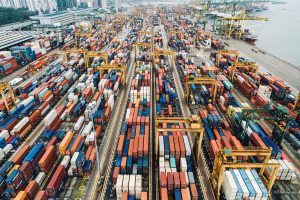
The manufacturing sector, encompassing textiles, garments, food processing, pharmaceuticals, and light electronics, receives 29–30% of industrial FDI, with foreign‑invested firms operating at over 60% capacity.
Nepal’s Special Economic Zones (SEZs) offer customs‑duty relief, export requirements, tax breaks, and long‑term land access—creating favorable conditions for export‑oriented light manufacturing.
Low labor costs, access to neighboring markets (India and China), and supportive policy frameworks further enhance industrial FDI appeal.
3. Information Technology & ICT / ITES
Nepal’s IT and communication industry is emerging rapidly, with over USD 515 million in IT service exports in 2022, up from USD 308 million the previous year.
Recent data confirms around 106 IT export companies and 66,000 freelancers active in software, fintech, BPO, digital services, and AI support firms.
The sector is fully open to FDI, allowing 100% foreign ownership, minimal initial capital requirements, and a vibrant English‑speaking workforce.
With favorable policies and high international demand, Nepal is positioned to become a regional tech hub.
4. Tourism & Hospitality
Tourism is a cornerstone of Nepal’s economy—accounting for 6–7% of GDP and generating NPR 76.6 billion in 2023/24. Tourist arrivals have rebounded strongly post‑pandemic, reaching over 1.2 million in 2024.
The government offers 100% foreign ownership, special concessions for investments in underdeveloped regions (e.g., Pokhara, Chitwan, Lumbini), and tax incentives for hotel/resort development.
High potential lies in luxury eco‑resorts, adventure tourism, cultural tourism, infrastructure (cable cars, airports), wellness retreats, and travel‑tech platforms.
5. Agriculture, Agro‑Processing & Food Technology
Agriculture remains a major employer and contributor to GDP (~23%), though it lags in modernization. Foreign investment in agro‑processing, organic farming, cold‑chain logistics, and value‑added specialty and export food products is critical.
While foreigners cannot directly own land, they can lease land or partner with local firms, and benefit from tax holidays and subsidies in agro‑infrastructure development.
6. Education & EdTech (Emerging)
With the rising middle class and increasing internet penetration, private international schools, vocational training, and online learning platforms are gaining traction.
Foreign investment is allowed via joint ventures or independently, and tech‑based education startups can register via FITTA with simplified procedures.
This sector offers long‑term value through teacher training, curriculum licensing, and digital skill development across Nepal.
7. Electric Vehicle (EV) Production & Mobility
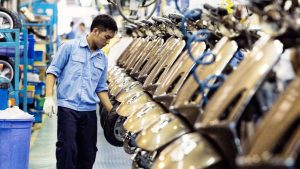
Nepal is witnessing an EV revolution: in 2023, 83% of new car purchases were electric; ~45,000 EVs on roads. Sales of electric four‑wheelers (4,050) and three‑wheelers (6,914) surged in FY 2022–23, shifting sales ratio to ~60:40 in favor of EVs over ICE vehicles.
Foreign investors—especially from India and China—are exploring assembly plants for electric two/three/four‑wheelers, supported by favorable policies, cheap electricity, and expanding demand.

FDI Landscape: Recent Trends & Contributors
- As of fiscal year 2022/23, total FDI inflows reached NPR 295.5 billion—up 11.8% year‑on‑year.
- The industrial sector contributed 59.7% of total FDI; services accounted for 40.2%, with financial, insurance, ICT, and hospitality leading within services.
- India leads as the largest investor (~35%), followed by China (12%), Ireland (7.7%), Australia (6.4%), and Singapore (6.4%).
- Bagmati Province (which includes Kathmandu) received nearly 60% of national FDI, followed by Gandaki (15.1%) and Koshi (14.7%).
️ Why Nebco Construction Should Position Itself in These Sectors
Nebco Construction, with its expertise in infrastructure, EPC projects, and engineering services, is well‑placed to drive growth across these FDI‑attractive industries:
- Hydropower & Energy: EPC contracts for dams, transmission lines, solar and wind installations—leveraging your civil and electrical engineering strengths.
- Tourism Infrastructure: Building resorts, lodges, cable car systems, airports, and hospitality properties in high-traffic regions.
- SEZ Development & Industrial Parks: Designing and constructing industrial zones, factories, light‑manufacturing facilities, warehousing, and logistics hubs.
- Agro‑processing Facilities: Building cold‑chain facilities, food‑processing plants, and packaging units aligned with foreign agribusiness investors.
- EV Manufacturing / Assembly Plants: Constructing facilities for EV assembly lines, service centers, and charging infrastructure.
- Tech‑Campus & EdTech Hubs: Developing campus infrastructure for educational institutions, tech parks, data centers, or IT outsourcing centers.
Summary Table
| Sector | FDI Share / Growth Potential | Nebco’s Value Proposition |
|---|---|---|
| Hydropower / Renewables | ~30% industrial FDI; vast untapped capacity | EPC & infrastructure expertise for dams, transmission, solar |
| Manufacturing / Light Industry | ~29% of industrial FDI; SEZs expanding | Building factories, SEZs, logistics parks |
| IT / ICT / ITES | Rapid exports; full FDI access | Data centers, tech parks, outsourced service campuses |
| Tourism | 6–7% GDP; tourist arrivals >1.2 M | Resort & hotel construction, adventure‑tourism infrastructure |
| Agro‑processing & Food Tech | Untapped agricultural value chain | Building cold‑chain, processing plants, packaging units |
| Education / EdTech | Growing digital demand & private schools | Campus, training center, e‑learning facility construction |
| EV / Mobility Production | Rapid EV adoption (>80% of new cars) | Assembly plants, charging stations, service infrastructure |
Conclusion:
Nepal stands at a transformative juncture. With strategic focus on hydropower, manufacturing, digital services, tourism, agriculture, education, and EV mobility, Foreign Direct Investment is accelerating—and Nebco Construction is ideally positioned to partner in these growth trajectories.
General FAQs on FDI in Nepal
1. What are the top sectors for foreign direct investment (FDI) in Nepal?
The top sectors include hydropower, manufacturing, information technology, tourism, agriculture, and electric mobility.
2. Why is Nepal becoming a hotspot for FDI?
Nepal offers low labor costs, proximity to India and China, abundant natural resources, and favorable government policies for foreign investors.
3. Which countries are the top sources of FDI in Nepal?
India, China, Ireland, Australia, and Singapore are among the leading countries investing in Nepal.
4. What are Nepal’s major FDI-related government bodies?
The Investment Board Nepal (IBN) and the Department of Industry oversee and facilitate FDI in the country.
5. Can foreign investors own 100% of a company in Nepal?
Yes, Nepal allows 100% foreign ownership in most sectors, including IT, tourism, manufacturing, and more.
6. Are there any sectors restricted for foreign investment in Nepal?
Yes, some sectors like real estate trading, weapon manufacturing, and security services are restricted.
7. How is FDI registered in Nepal?
FDI is registered through FITTA (Foreign Investment and Technology Transfer Act) via the Department of Industry or IBN, depending on investment size.
8. What incentives does Nepal offer to foreign investors?
Tax holidays, VAT refunds, customs exemptions, repatriation rights, and simplified licensing in SEZs.
9. Are there Special Economic Zones (SEZs) in Nepal?
Yes, Nepal has several SEZs offering additional tax benefits and infrastructure support for export-oriented businesses.
10. What are the main challenges for FDI in Nepal?
Land acquisition, bureaucratic delays, political instability, and lack of infrastructure in some areas.
️ Construction, Infrastructure & Nebco-Specific FAQs
11. What role does Nebco Construction play in Nepal’s FDI-driven sectors?
Nebco specializes in civil engineering, EPC contracts, and infrastructure development across hydropower, industrial, tourism, and agro sectors.
12. Is Nebco Construction involved in hydropower projects?
Yes, Nebco has expertise in hydropower plant construction, including dams, substations, and transmission lines.
13. Can Nebco assist foreign investors with SEZ and industrial park construction?
Absolutely. Nebco offers turnkey solutions for SEZ development, industrial units, and warehouse facilities.
14. Does Nebco build resorts or hospitality infrastructure for tourism investments?
Yes, Nebco constructs eco-resorts, hotels, cable car systems, and tourist infrastructure.
15. Is Nebco involved in building agro-processing plants in Nepal?
Yes, Nebco helps establish cold storage facilities, food processing units, and logistic hubs for agri-businesses.
16. Can Nebco help build IT and tech infrastructure in Nepal?
Yes, Nebco offers design and construction of tech parks, co-working hubs, and digital service campuses.
17. How does Nebco support EV and mobility infrastructure development?
Nebco constructs assembly plants, EV service stations, battery charging hubs, and related infrastructure.
18. What makes Nebco a reliable partner for foreign investors?
Nebco brings local expertise, regulatory know-how, strong project management, and experience in working with international partners.
19. Can Nebco handle design-to-delivery construction projects?
Yes, Nebco offers full EPC (Engineering, Procurement, and Construction) services.
20. How can foreign investors collaborate with Nebco Construction?
Through joint ventures, subcontracting, or EPC contracts, depending on the project scope and sector.
Sector-Specific FDI FAQs (Targeting High-Intent Search Terms)
21. What is the FDI potential in Nepal’s hydropower sector?
With over 42,000 MW of viable capacity and growing demand from India and Bangladesh, hydropower is Nepal’s most attractive FDI sector.
22. Is Nepal a good destination for IT outsourcing and software development?
Yes. Nepal offers affordable skilled talent, English fluency, and full FDI access for IT firms.
23. How is FDI contributing to tourism growth in Nepal?
Foreign investment has helped develop eco-tourism, luxury resorts, adventure tourism, and cultural destinations.
24. Are there investment opportunities in Nepal’s agriculture sector?
Yes, especially in organic farming, processing, cold-chain logistics, and exportable niche products.
25. What makes Nepal suitable for electric vehicle (EV) investment?
Nepal’s growing EV market, low electricity rates, and EV-friendly policies make it ideal for EV production and infrastructure projects.
Contact Details of Nebco:
Kuleshwor, Kathmandu, Nepal
+9779851049695, +9779851065943


