
How NEBCO Ensures Fire Safety in Buildings
Fire safety is one of the most critical responsibilities in construction. It protects lives, preserves property, ensures business continuity, and builds long-term trust between a builder and its clients. At NEBCO Construction, fire safety is never treated as an afterthought or a box-ticking exercise. Instead, it is woven deeply into planning, design, material selection, execution, inspection, and handover. This in-depth guide explains How NEBCO Ensures Fire Safety in Buildings, highlighting NEBCO’s disciplined systems, practical engineering decisions, and safety-first culture that define every project.
1. Fire Safety as a Core Value at NEBCO
How NEBCO Ensures Fire Safety in Buildings begins with mindset. NEBCO views fire safety as a moral and professional obligation, not merely a legal requirement. From the earliest discussions, the team prioritizes fire prevention, containment, safe evacuation, and effective response. This proactive philosophy ensures that fire safety decisions are never rushed or compromised by cost or schedule pressures.
2. Early Fire Safety Planning at the Design Stage
How NEBCO Ensures Fire Safety in Buildings starts at design. NEBCO integrates fire safety into architectural and engineering layouts from day one. Escape routes, staircases, corridor widths, fire compartments, and service shafts are planned before construction begins, ensuring compliance and practicality without later redesigns.
3. Fire Code Compliance and Interpretation
How NEBCO Ensures Fire Safety in Buildings includes strict adherence to applicable building and fire safety codes. NEBCO not only follows regulatory requirements but interprets them responsibly for real-world conditions. Where codes offer flexibility, NEBCO selects safer options rather than minimum compliance.
4. Compartmentation to Limit Fire Spread
How NEBCO Ensures Fire Safety in Buildings relies heavily on compartmentation. Fire-rated walls, slabs, and ceilings are used to divide buildings into manageable fire zones. This approach slows fire spread, protects escape routes, and provides precious time for occupants and emergency responders.
5. Fire-Resistant Construction Materials
How NEBCO Ensures Fire Safety in Buildings includes careful material selection. NEBCO prioritizes fire-rated blocks, fire-resistant plasters, certified boards, and fire-retardant coatings. Every material is evaluated not just for strength and aesthetics, but for behavior under high temperatures.
6. Quality-Controlled Fireproofing Systems
How NEBCO Ensures Fire Safety in Buildings extends to fireproofing of structural elements. Columns, beams, and slabs are protected using approved fireproofing methods. NEBCO enforces precise thickness control and curing procedures to ensure systems perform as designed during fire exposure.
7. Electrical Fire Risk Management
How NEBCO Ensures Fire Safety in Buildings addresses one of the leading causes of fires: electrical faults. NEBCO installs properly rated wiring, circuit breakers, earthing systems, and protective conduits. Load calculations and segregation of circuits reduce overheating and short-circuit risks.
8. Safe Design of Mechanical and HVAC Systems
How NEBCO Ensures Fire Safety in Buildings includes fire-safe HVAC planning. Fire dampers, smoke dampers, and fire-resistant ducting are integrated to prevent smoke and fire spread through ventilation systems. Equipment placement also considers service access and isolation during emergencies.
9. Installation of Fire Detection and Alarm Systems
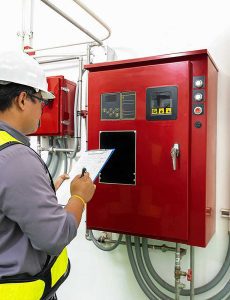
How NEBCO Ensures Fire Safety in Buildings includes robust fire detection. Smoke detectors, heat detectors, manual call points, and alarm panels are installed at strategic locations. NEBCO ensures clear audibility and visibility so occupants receive early warning and can evacuate swiftly.
10. Fire Suppression Systems for Active Protection
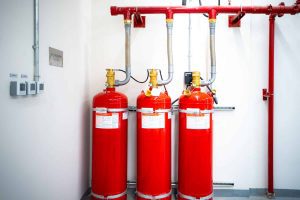
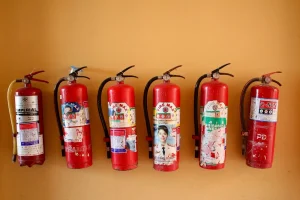
How NEBCO Ensures Fire Safety in Buildings incorporates active suppression systems. Depending on building type, NEBCO designs and installs sprinklers, hose reels, hydrants, and extinguishers. Systems are sized appropriately for water supply, pressure, and coverage requirements.
11. Smoke Control and Ventilation Strategies
How NEBCO Ensures Fire Safety in Buildings focuses strongly on smoke management. Smoke is more dangerous than flames in many fires. NEBCO integrates smoke shafts, pressurized stairwells, and natural or mechanical ventilation to maintain visibility and breathable conditions during evacuation.
12. Safe Escape Routes and Evacuation Design
How NEBCO Ensures Fire Safety in Buildings prioritizes people’s ability to exit safely. Staircases, corridors, doors, and exit signage are designed for clarity and accessibility. NEBCO avoids complex layouts that confuse occupants during emergencies.
13. Fire-Rated Doors and Hardware
How NEBCO Ensures Fire Safety in Buildings includes proper door systems. Fire-rated doors, frames, closers, and panic hardware are specified and installed correctly. NEBCO closely monitors alignment, gaps, and self-closing mechanisms to maintain fire resistance.
14. Protection of Service Shafts and Penetrations
How NEBCO Ensures Fire Safety in Buildings addresses vulnerable service penetrations. Pipes, cables, and ducts passing through fire-rated walls are sealed with certified fire-stopping materials to prevent hidden fire spread.
15. Site-Level Fire Safety During Construction
How NEBCO Ensures Fire Safety in Buildings extends to the construction phase. Temporary electrical systems, hot work controls, fire extinguishers, and site training are enforced. NEBCO understands that many fires occur before occupancy, making construction-stage safety critical.
16. Trained Workforce and Safety Awareness
How NEBCO Ensures Fire Safety in Buildings depends on people. Workers, supervisors, and engineers receive fire-safety awareness training. They understand evacuation procedures, extinguisher use, and reporting protocols, creating a culture of vigilance.
17. Inspections, Testing, and Documentation
How NEBCO Ensures Fire Safety in Buildings includes rigorous inspection. Every fire safety component is tested, documented, and verified before handover. NEBCO keeps records to ensure future maintenance and regulatory checks are straightforward.
18. Coordination With Fire Authorities and Consultants
How NEBCO Ensures Fire Safety in Buildings often involves collaboration. NEBCO works with fire safety consultants and authorities during planning and final inspections, ensuring designs are practical and approved without last-minute changes.
19. Fire Safety Integration in Different Building Types
How NEBCO Ensures Fire Safety in Buildings adapts by project type. Residential, commercial, industrial, and institutional buildings all present unique risks. NEBCO customizes strategies to suit occupancy density, usage patterns, and operational risks.
20. Handover, Maintenance, and Long-Term Safety
How NEBCO Ensures Fire Safety in Buildings does not end at completion. NEBCO provides guidance on system operation, maintenance schedules, and emergency planning. This long-term approach ensures fire safety systems remain effective throughout the building’s life.
Conclusion
How NEBCO Ensures Fire Safety in Buildings is a result of experience, discipline, and responsibility. By combining thoughtful design, quality materials, strict execution, skilled teams, and transparent processes, NEBCO delivers buildings that prioritize life safety without compromise. Fire safety at NEBCO is not a feature—it is a foundation.
Contact Details of Nebco:
Location: Kuleshwor, Kathmandu, Nepal
Email: [email protected]
Phone: +9779803850955
FAQs about How NEBCO Ensures Fire Safety in Buildings:-
1. What does fire safety mean in NEBCO construction projects?
Fire safety at NEBCO means designing, building, and maintaining structures in a way that prevents fire outbreaks, limits fire spread, enables safe evacuation, and protects occupants and property throughout the building’s life cycle.
2. How early does NEBCO consider fire safety during a project?
NEBCO considers fire safety from the very first design and planning stage, integrating escape routes, fire compartments, and system layouts before construction begins.
3. Why is early fire safety planning important in construction?
Early planning prevents design conflicts, ensures compliance with regulations, and avoids costly changes later while maximizing occupant safety.
4. How does NEBCO ensure compliance with fire safety regulations?
NEBCO strictly follows applicable building and fire codes, documents compliance at each stage, and ensures all systems are installed and tested as per approved standards.
5. Does NEBCO only follow minimum fire safety requirements?
No. NEBCO often goes beyond minimum requirements by adopting safer layouts, higher-rated materials, and additional precautions where needed.
6. What role does building layout play in fire safety at NEBCO?
Layout is critical. NEBCO designs clear escape paths, adequately spaced exits, and fire-separated zones to reduce confusion and risk during emergencies.
7. How does NEBCO prevent fire from spreading inside buildings?
Fire spread is controlled through compartmentation using fire-rated walls, slabs, doors, and sealed service penetrations.
8. What are fire compartments, and why are they important?
Fire compartments divide a building into sections that slow fire spread, protect escape routes, and allow safe evacuation and firefighting.
9. How does NEBCO choose fire-resistant materials?
NEBCO selects materials based on certified fire-resistance ratings, durability, and real-world performance in high-temperature conditions.
10. Are structural elements protected from fire at NEBCO sites?
Yes. NEBCO applies fireproofing systems to structural components to maintain load-bearing capacity during a fire.
11. What are the biggest electrical fire risks in buildings?
Overloading, poor wiring, and improper earthing are major risks that NEBCO addresses through proper design and installation standards.
12. How does NEBCO reduce electrical fire hazards?
By using approved wiring, proper cable sizing, circuit protection, earthing systems, and disciplined installation practices.
13. Does NEBCO install fire detection systems?
Yes. Smoke detectors, heat detectors, alarm panels, and manual call points are integrated based on building requirements.
14. Why is early fire detection so important?
Early detection allows faster evacuation and response, significantly reducing risk to life and property.
15. What fire suppression systems does NEBCO use?
Depending on the project, NEBCO installs sprinklers, fire hydrants, hose reels, portable extinguishers, or combined systems.
16. Are fire extinguishers enough for safety?
No. Fire extinguishers are only one layer. NEBCO ensures multiple layers including detection, suppression, compartmentation, and evacuation design.
17. How does NEBCO manage smoke during a fire?
NEBCO integrates smoke control systems such as smoke shafts, ventilation paths, and pressurized staircases.
18. Why is smoke control critical in fire safety?
Smoke causes most fire-related fatalities, so controlling it ensures visibility and breathing conditions during evacuation.
19. How are escape routes designed by NEBCO?
Escape routes are designed to be direct, unobstructed, clearly marked, and adequately sized to handle occupant loads safely.
20. Does NEBCO install fire-rated doors?
Yes. Fire-rated doors with proper hardware are used to maintain compartment integrity and protect exits.
21. What makes a fire-rated door effective?
Correct rating, proper installation, self-closing mechanisms, and intact seals are all essential.
22. How does NEBCO handle service penetrations safely?
All penetrations through fire-rated elements are sealed using certified fire-stopping systems.
23. Why are service penetrations a fire risk?
Unsealed penetrations can allow fire and smoke to spread rapidly through hidden paths.
24. How is fire safety managed during construction itself?
NEBCO enforces hot-work permits, temporary fire equipment, safe electrical practices, and worker awareness programs.
25. Are workers trained in fire safety at NEBCO sites?
Yes. Workers receive training on fire risks, extinguisher use, evacuation procedures, and emergency response.
26. Why is worker awareness important for fire prevention?
Most site fires are caused by human error; trained workers significantly reduce this risk.
27. How often are fire safety systems inspected by NEBCO?
Inspections occur at multiple construction stages and again before handover to ensure full functionality.
28. Does NEBCO document fire safety systems?
Yes. NEBCO provides documentation for installed systems, test results, and maintenance guidance.
29. Why is documentation important for fire safety?
Documentation supports future maintenance, legal compliance, and safe building operation.
30. Does NEBCO work with fire safety experts?
Yes. Where required, NEBCO collaborates with fire consultants and authorities to ensure proper design and approval.
31. How does fire safety differ between residential and commercial buildings?
Commercial buildings usually require stronger systems due to higher occupancy, which NEBCO accounts for in design.
32. Does NEBCO adjust fire safety for building usage?
Absolutely. Fire safety strategies are customized based on occupancy type and risk level.
33. How does NEBCO address fire safety in high-occupancy buildings?
By increasing exit capacity, improving detection coverage, and strengthening suppression systems.
34. Are stairs designed with fire safety in mind at NEBCO?
Yes. Stairwells are often protected, pressurized, and separated to remain usable during emergencies.
35. How does NEBCO ensure emergency lighting works during fires?
Backup power and emergency lighting systems are integrated to operate during power failures.
36. What happens after fire systems are installed?
Systems are tested, verified, and demonstrated before approval or handover.
37. Does NEBCO educate clients about fire safety?
Yes. Clients receive guidance on building fire systems, emergency procedures, and maintenance needs.
38. Why is maintenance important for fire safety systems?
Even the best systems fail if not maintained. NEBCO emphasizes long-term performance.
39. Does fire safety end after construction is complete?
No. Fire safety is a continuous responsibility throughout a building’s life.
40. How does NEBCO plan for emergency evacuations?
Through clear signage, logical routes, protected stairs, and evacuation-friendly layouts.
41. Are exits clearly marked in NEBCO buildings?
Yes. Exit signage is strategically positioned for visibility even during smoke or power failure.
42. How does NEBCO reduce fire ignition risks?
By controlling electrical quality, material storage, and heat-producing activities.
43. Does NEBCO use fire-retardant finishes?
Where appropriate, fire-retardant coatings and finishes are used to slow flame spread.
44. Can fire safety measures increase construction costs?
Some measures add cost initially, but NEBCO views them as long-term investments in safety and value.
45. How does NEBCO balance safety and affordability?
By selecting efficient, proven systems that provide strong protection without unnecessary excess.
46. What testing is done before handover?
Alarm testing, flow testing, detector checks, and system integration tests are completed.
47. Are fire drills considered in NEBCO’s planning?
NEBCO supports fire drill planning by designing buildings that allow safe and orderly evacuation.
48. How does NEBCO ensure system reliability?
Through disciplined installation, approved materials, and systematic inspections.
49. What happens if a defect is found in fire systems?
NEBCO rectifies issues immediately and re-tests systems before approval.
50. Does NEBCO plan for power failure during fire emergencies?
Yes. Backup power solutions ensure alarms and emergency lighting function.
51. How does NEBCO integrate fire safety with architecture?
Fire safety is harmonized with design so safety systems do not feel intrusive or disruptive.
52. Can fire safety be customized for client needs?
Yes. NEBCO adapts solutions based on occupancy type, risk profile, and client priorities.
53. Why is fire safety especially important in urban buildings?
Dense development increases fire spread risk, making NEBCO’s disciplined planning essential.
54. Does NEBCO use real-world fire scenarios in planning?
Yes. NEBCO anticipates realistic scenarios, including smoke behavior and evacuation patterns.
55. How does NEBCO protect property value through fire safety?
Well-designed fire safety systems reduce damage risk and insurance concerns.
56. Can poor construction compromise fire safety?
Yes, which is why NEBCO emphasizes workmanship and inspection.
57. How does NEBCO enforce quality during installation?
Through supervision, checklists, and approval hold points.
58. What role do supervisors play in fire safety?
Supervisors ensure correct installation and immediate correction of deviations.
59. Does NEBCO consider future building modifications?
Yes. Fire safety layouts consider adaptability without compromising safety.
60. How does NEBCO handle fire safety in mixed-use buildings?
By separating uses with appropriate fire zones and customized systems.
61. What is the biggest fire safety mistake NEBCO avoids?
Treating fire safety as a last-minute requirement rather than a core system.
62. How does NEBCO ensure long-term reliability of systems?
Through durable materials, clear maintenance guidance, and robust installation.
63. Does NEBCO rely on technology alone for safety?
No. Technology is supported by strong design and human awareness.
64. How does NEBCO reduce human error risks?
By simplifying layouts and making safety systems intuitive.
65. Why is fire safety considered a shared responsibility?
Because design, construction, and user behavior all influence safety outcomes.
66. How does NEBCO support safe evacuation for all occupants?
By designing accessible routes and proper signage.
67. Can fire safety improve building durability?
Yes. Fire-resistant construction protects structural integrity during incidents.
68. How does NEBCO measure fire safety success?
By system reliability, occupant safety, and regulatory approval.
69. Why do clients trust NEBCO with fire safety?
Because NEBCO combines discipline, experience, and responsibility.
70. What defines NEBCO’s approach to fire safety overall?
A commitment to protecting lives first, without compromise.
Contact Details of Nebco:
Location: Kuleshwor, Kathmandu, Nepal
Email: [email protected]
Phone: +9779803850955


